
2–1. CRAFT / FABRIC
How are clothes made?
From SPA labels to luxury houses, the overall process of making clothes is not that different.
But once you look more closely, there are details that make all the difference. And that is where things get interesting.
Today, we want to share how an ARCHENIS garment comes to life, from beginning to end.
1. Fabric
You may find it surprising that fabric comes before design.
Most people assume design comes first and fabric follows.
That is how we approached things at first as well.
We would begin with the design and then look for the right fabric.
But working that way, we kept running into the same problem.
The design would be finished yet we could not find a fabric capable of truly bringing it to life.
When that happens, the silhouette and atmosphere you first imagined begin to fall apart.
A design that looked strong on paper loses its force in reality.
No matter how compelling the sketch may be, if the fabric cannot support it, the piece remains little more than an ideal.
That is why, in most cases, fabric comes first for us.
Roughly seventy percent of the time we begin by selecting fabric and build the design from there.
There are moments when we feel a design absolutely has to be made, and in those cases we begin with the design first and search for the fabric after. But that is the exception.
Fabric selection is not about taste. It is about material judgment.
Seeing a fabric and thinking,
“This is beautiful.”
“This looks luxurious.”
“This has a great mood.” is not enough to arrive at the right result.
What matters first is something deeper.
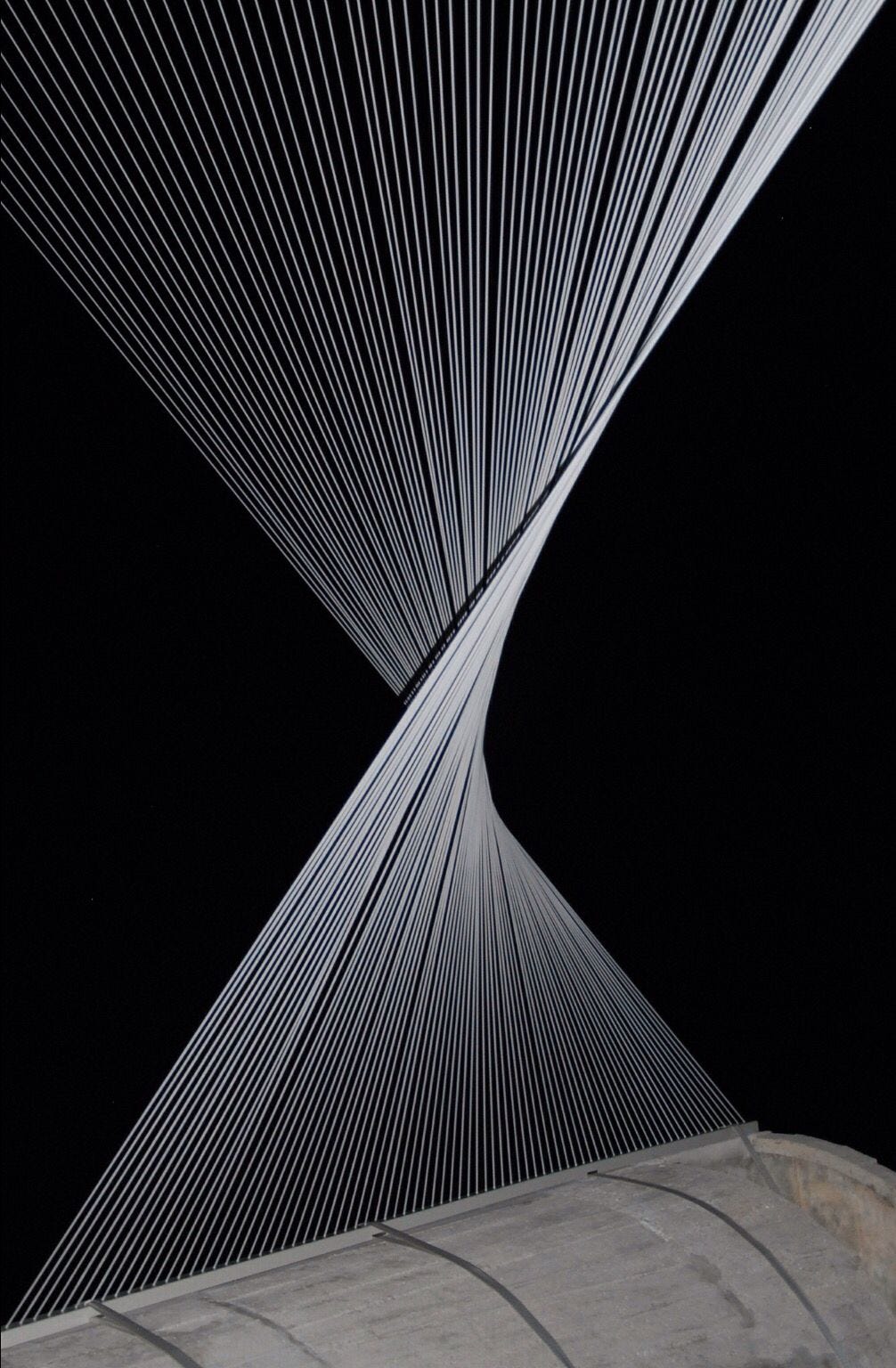
How much stretch does it have?
Is the strength sufficient?
How does it drape?
How much sheen does it carry?
How does it feel against the skin?
How does it handle moisture?
How well does it recover?
Only after reading those qualities can you begin to understand what the fabric is actually capable of becoming.
Thankfully, I studied textile engineering in university.
That means when I look at fabric, I do not begin with surface impression alone.
I begin with structure with the general characteristics of each type of fabric, with mechanical performance and material behavior, with yarn count and twist and with the strengths of both natural and synthetic fibers and how those properties work together in practice.
Without that level of understanding fabric choices become unstable even when the design itself is strong.
Two fabrics may appear similar on the surface but one may fail to support the silhouette another may weaken the intention of the pattern, and another may produce a sensation on the body that is completely different from what was intended.
That is why ARCHENIS always looks at three things when selecting fabric.
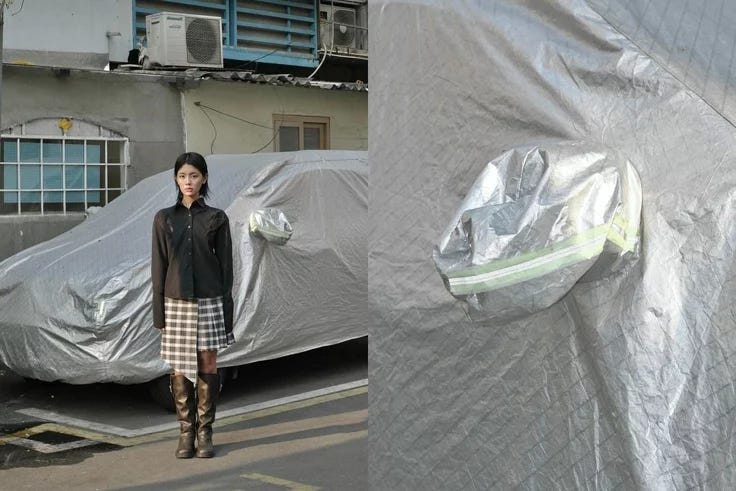
First, whether it can express the design with accuracy.
Second, what kind of feeling and performance it delivers when worn.
Third, whether it aligns with the overall look and direction of the brand.
When needed we source already finished fabrics or apply additional finishing processes to stabilize shrinkage and improve mechanical properties such as sheen, water resistance and durability.
ARCHENIS primarily works with premium fabrics from Korea, Turkey, Italy, and Japan and so on.
But origin alone is never the point.
What matters far more is how deeply a fabric is understood and how accurately one can judge what kind of atmosphere and performance it will bring to a garment.
That method is something we continue to apply, refine, and improve through constant feedback.
We also avoid materials with unclear provenance or fabrics whose quality and fiber composition cannot be properly verified.
In other words, we do not use the kind of low-cost fabrics that sit at the foundation of cheap mass-market clothing.
Cost cutting always comes back somewhere in the process.
We would rather look for efficiencies elsewhere and maintain quality in a way that can be sustained.
We believe good clothes begin with good judgment.
And the first judgment is always fabric.
Sourcing — Premium fabrics in Korea

So where does ARCHENIS source its fabrics?
The answer is the result of a great deal of time, movement, and persistence.
And it is still an ongoing effort.
To secure excellent fabrics and truly high-grade materials, we searched for Korean fabric suppliers across the country and built relationships with them.
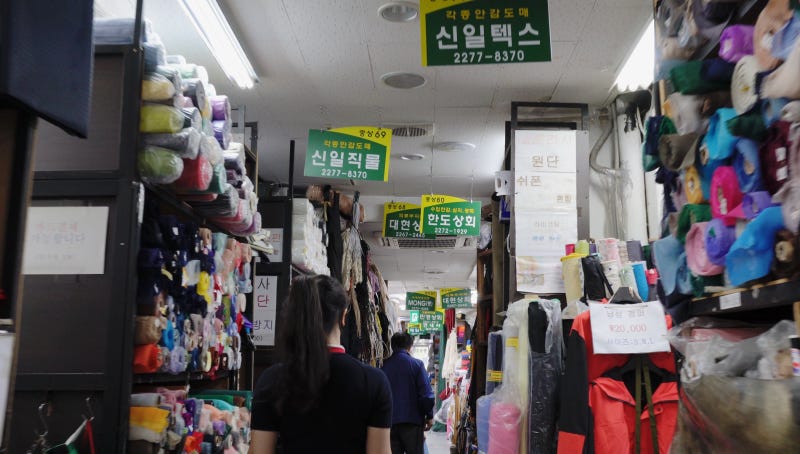
We also source at Seoul dongdaemun Jonghap Market the best-known and largest fabric market in Korea.
On average we visit in person at least once a month.
We look through new fabrics, speak with suppliers, exchange ideas about new developments, and often hear the kind of industry insight that only comes through direct conversation.

Beyond Dongdaemun, we also source from other markets we discovered through continuous legwork.
It is possible to find things online of course.
But this remains a world where much of the real information still does not reveal itself unless you move for it in person.
We continue this effort because we want to keep presenting better fabrics.
Because we understand the power of textiles.
And because fabric something I spent so much time around in my twenties remains especially meaningful to us.
That said not every option available in those markets aligns with the direction of ARCHENIS.
In mass-market environments basic fabrics and widely used materials naturally dominate.
So the act of identifying what is truly worth using becomes a process in itself.
There is no compromise when it comes to fabric.
Sourcing — Premium fabrics from abroad

That said, we do not rely on Dongdaemun and a handful of domestic vendors for all of our main fabrics.
Dongdaemun offers an enormous variety but more than eighty percent of what is available there consists of basic fabrics intended for low- to mid-priced garments.
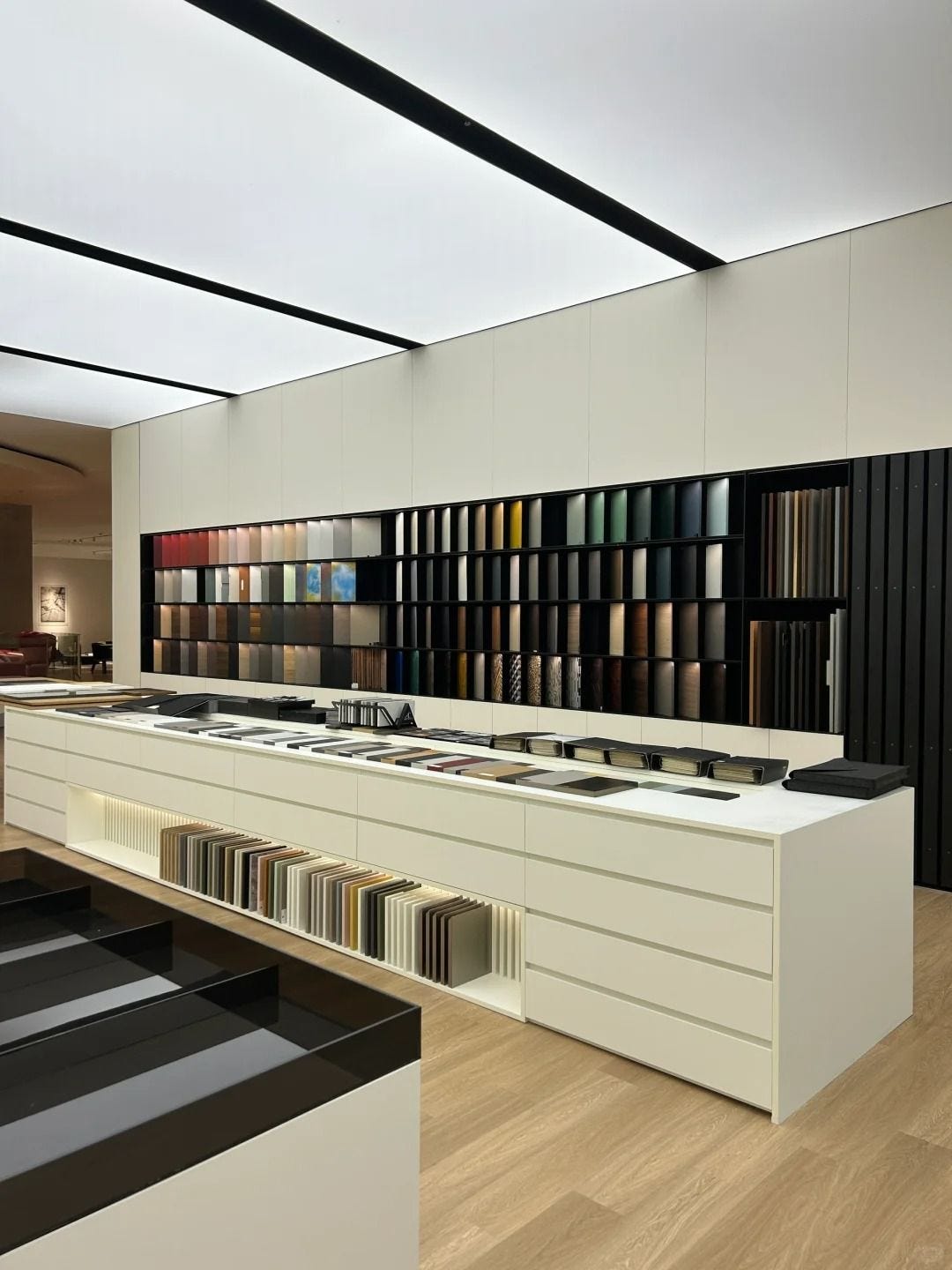
We felt that selecting only from within that system had clear limits.
So in addition to sourcing through Korean distributors of imported fabrics we also source internationally ourselves when needed.
It was difficult to find the right overseas sources but today we import and source premium fabrics from three plus additional channels abroad.
At times, we work with fabrics from the same family of materials used by European luxury houses.
Not because of the name attached to them.
But because we know exactly how much a truly refined material — one with proven structure, density, expression, and finish — can transform the atmosphere of a garment.
In some cases these are fabrics used in actual collections by houses such as Celine, Dior, and Louis Vuitton.
That is as much as we can say for now.
ARCHENIS places greater value on materials that can produce a better result in limited quantities than on fabrics that are easy to repeat endlessly in large-scale production.
That means reorders are not always simple, and some fabrics disappear once they are gone.
But the density and rarity that come from a garment made at the meeting point of a strong fabric and the right moment is something we care deeply about.
(We also plan to expand our sourcing further in the second half of 2026 through direct sourcing in Japan, North Africa, and parts of Europe nearby allowing us to work with even more varied and elevated materials.)
How we narrow fabric choices
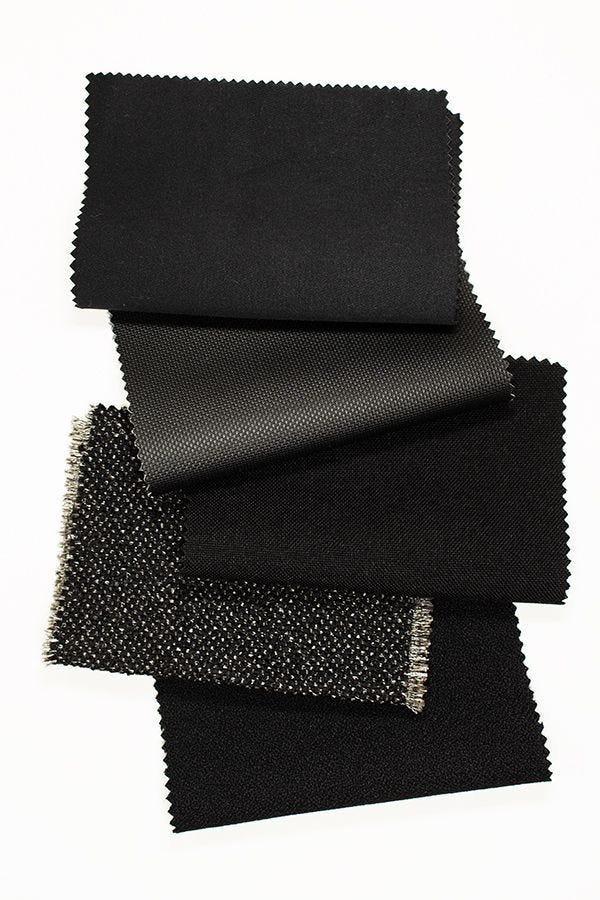
These are some of the swatches in our studio.
A swatch is simply a small sample cut from a fabric, used to compare possibilities before larger decisions are made.
We usually do not begin by bringing in large quantities right away.
We begin by narrowing the field through swatches.
Once we shortlist candidates based on category and design direction, we compare and review them again.
At this stage we are not simply asking whether something looks good.
We look at whether it connects naturally with the rest of the season whether its mechanical behavior can support the intended silhouette, and how it changes in actual use through water, friction, washing, and wear.

When necessary we wet the fabric ourselves wash it and observe shrinkage and changes in surface character.
And when more precise judgment is needed, we turn to testing labs.
Because what looks good to the eye is not always what will endure over time.
Having studied textile engineering I also have many classmates and seniors working in testing laboratories so these environments are deeply familiar to me.
For me fabric is more than a first priority.
Textile engineering is now a field that fewer people choose.
By the time I graduated, many textile departments had already been renamed or absorbed into newer disciplines such as advanced materials and semiconductors.
But I stayed with textiles through that turning point.
And my graduation thesis focused on improving suiting materials.
For ARCHENIS, fabric is not simply the first material in the process.
It is the foundation that determines the character of the garment itself.
People often say that good clothing is decided in the details.
But before the details there is always the long deliberate process of identifying the right material.
That is not a process we are willing to rush.
→ Next Article