
2–4. CRAFT / FITTING, SAMPLING, AND MAIN PRODUCTION
Fittings, samples, and the repetition of revision
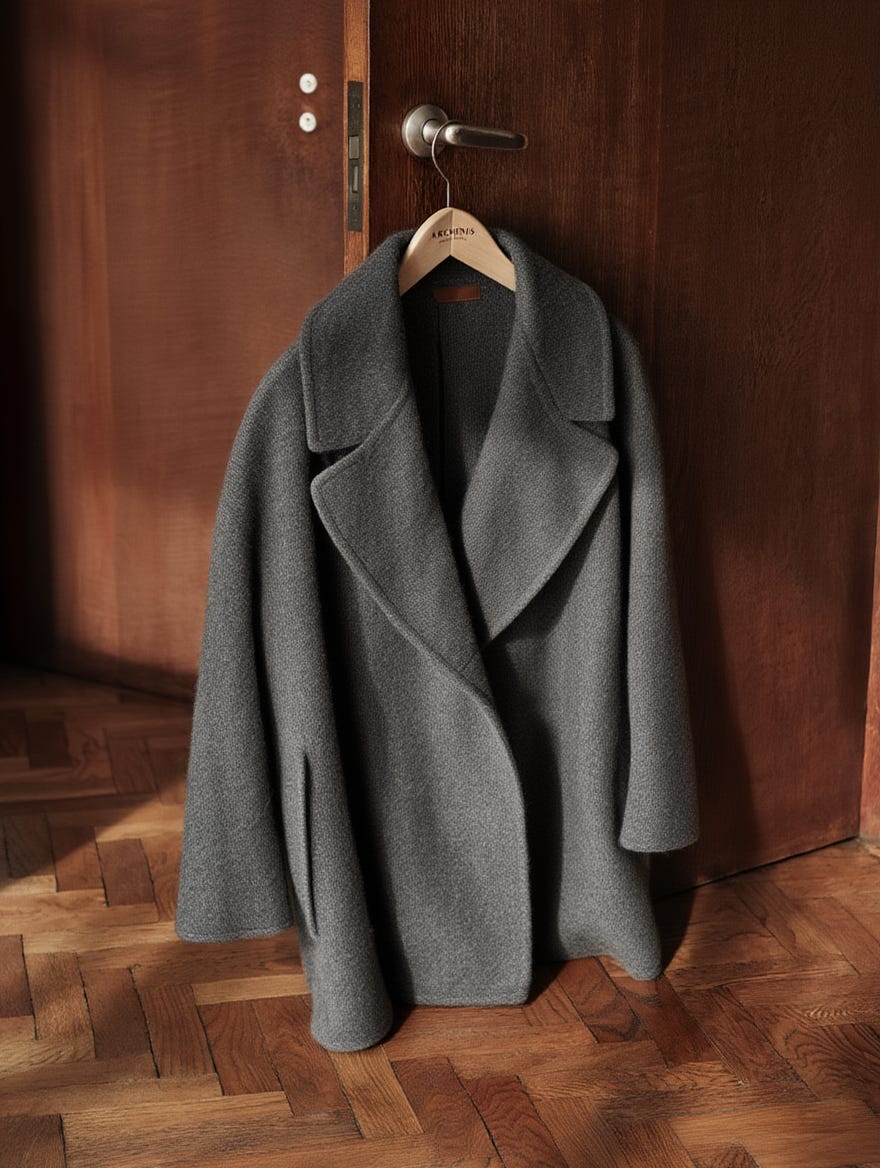
At this stage, the pattern, design, fabric, and trims have all been selected.
From here, the process moves into testing whether the garment can actually be realized in the way it was intended.
And that process always begins with a tech pack.
A tech pack is the document that sets the standard for making a garment.
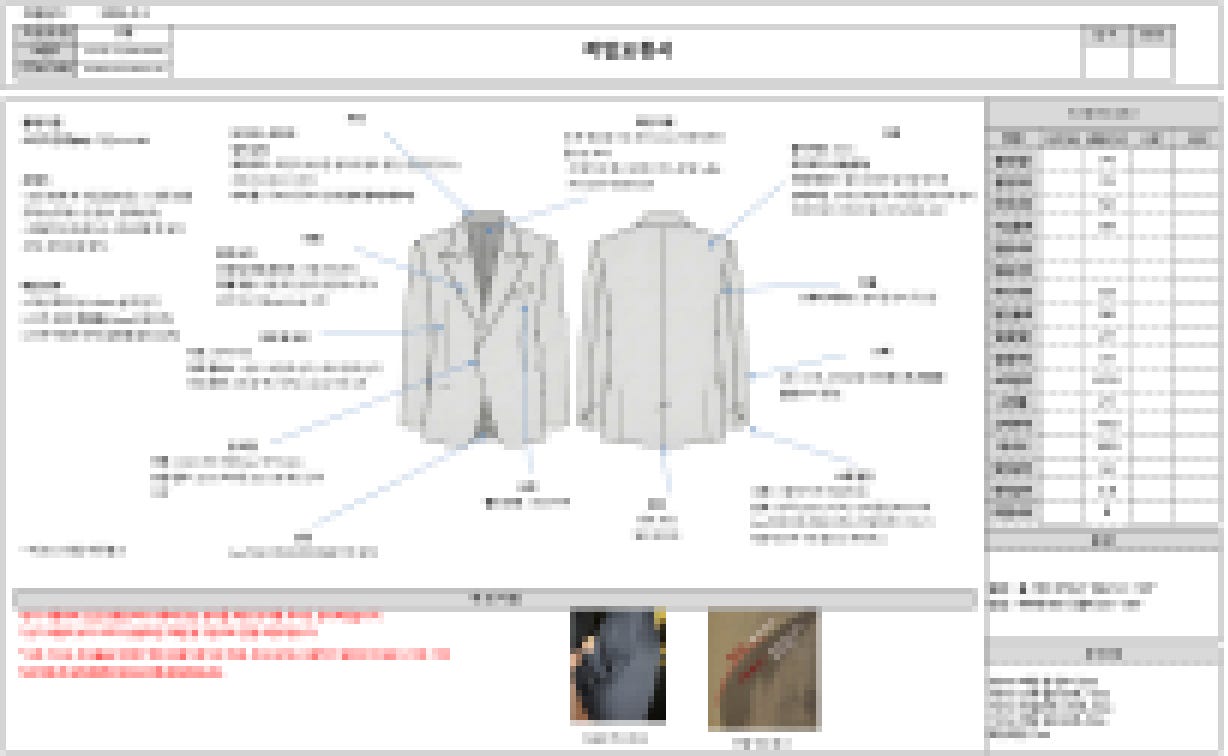
This is part of our work order. This is the type of document we will be producing.
It includes what fabric will be used, what trims will go into it, how the sizing of each part should be handled, what kinds of construction are required, and even details such as stitch count, angle, and distance.
In simple terms, it is like a small business plan for a single garment.
Based on that document, we move into either sampling alone or fitting plus sampling.
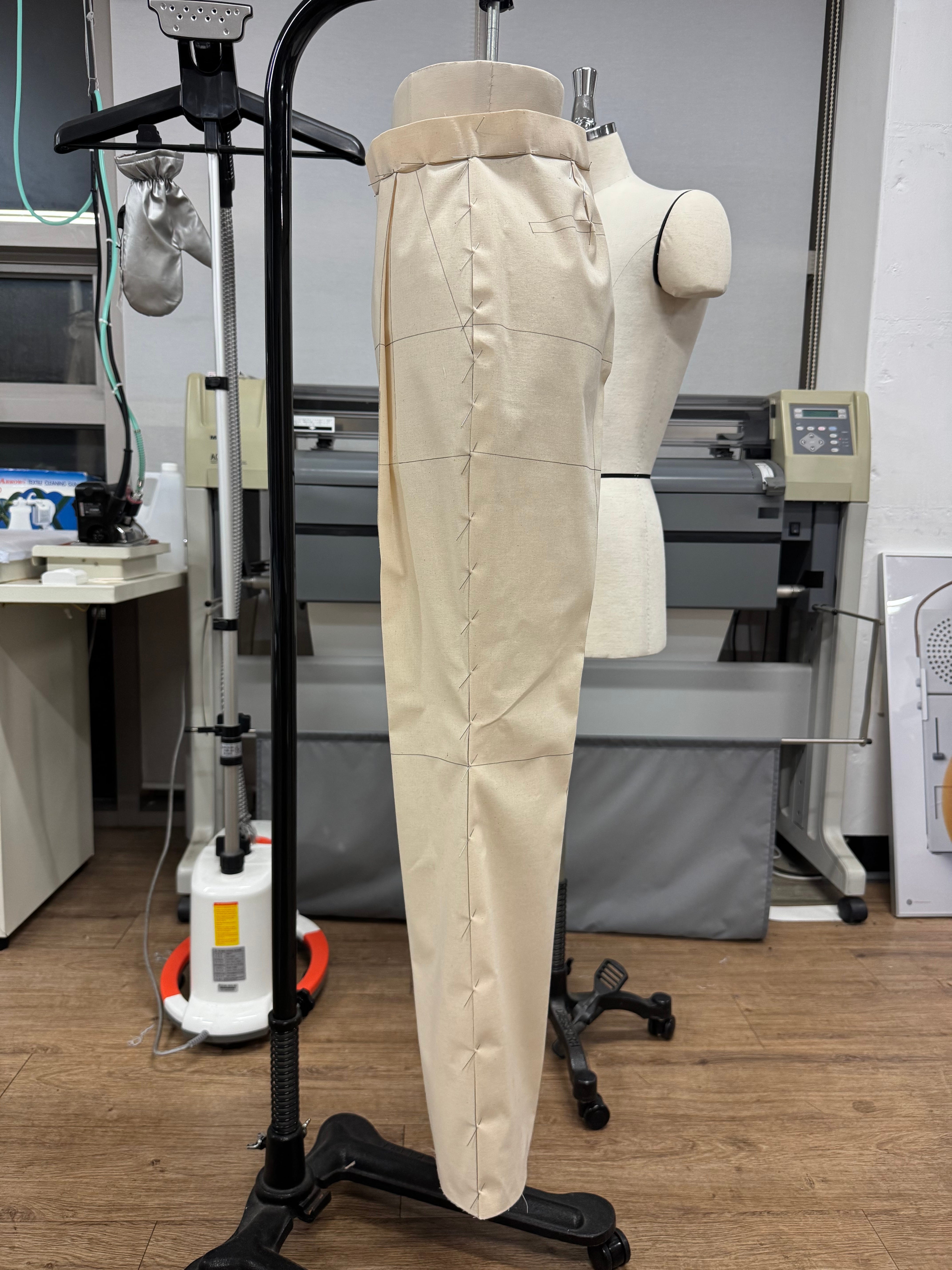
Fitting
A fitting comes before full sample making.
It is the stage where the garment is temporarily sewn in an inexpensive fabric or muslin so that we can try it on, check the fit, and make corrections.
In Korean, the word itself literally suggests a kind of provisional sewing.
At the fitting stage, we look at sizing, comfort, and silhouette. The goal is to catch the major issues early.
Sample
A sample is one step closer to the real garment.
This is where the design, pattern, fabric, and trims meet under conditions that are much closer to the final product.
We check how the piece fits whether the silhouette comes through as intended whether movement feels natural, and what still needs to be corrected on the body.
The difference between a fitting and a sample is straightforward.
A fitting is a faster and more economical step. It uses minimal sewing, minimal trims, and minimal fabric in order to check the larger shape and overall feel.
A sample is the prototype made before bulk production.
Repetition is part of the work
Good clothing is rarely completed in one attempt.
Sometimes the design itself needs to change.
Sometimes the pattern behaves differently from what was expected.
Sometimes the fabric or trims disrupt the entire impression.
And sometimes all of those things have to be revised at once.
That is why ARCHENIS tries to break the process into stages whenever possible.
Rather than jumping directly into a sample we first review the overall silhouette and fit through a fitting, then move on to a sample after that.
Of course dividing the process this way increases the overall cost.
But it also increases the accuracy of the garment we are trying to create.
In some cases a piece may end after one fitting and one sample. But that is rare.
Most garments improve little by little through multiple rounds of fittings and multiple rounds of samples.
Only after those repetitions do we arrive at the moment when we can finally say, this is ready to go out.
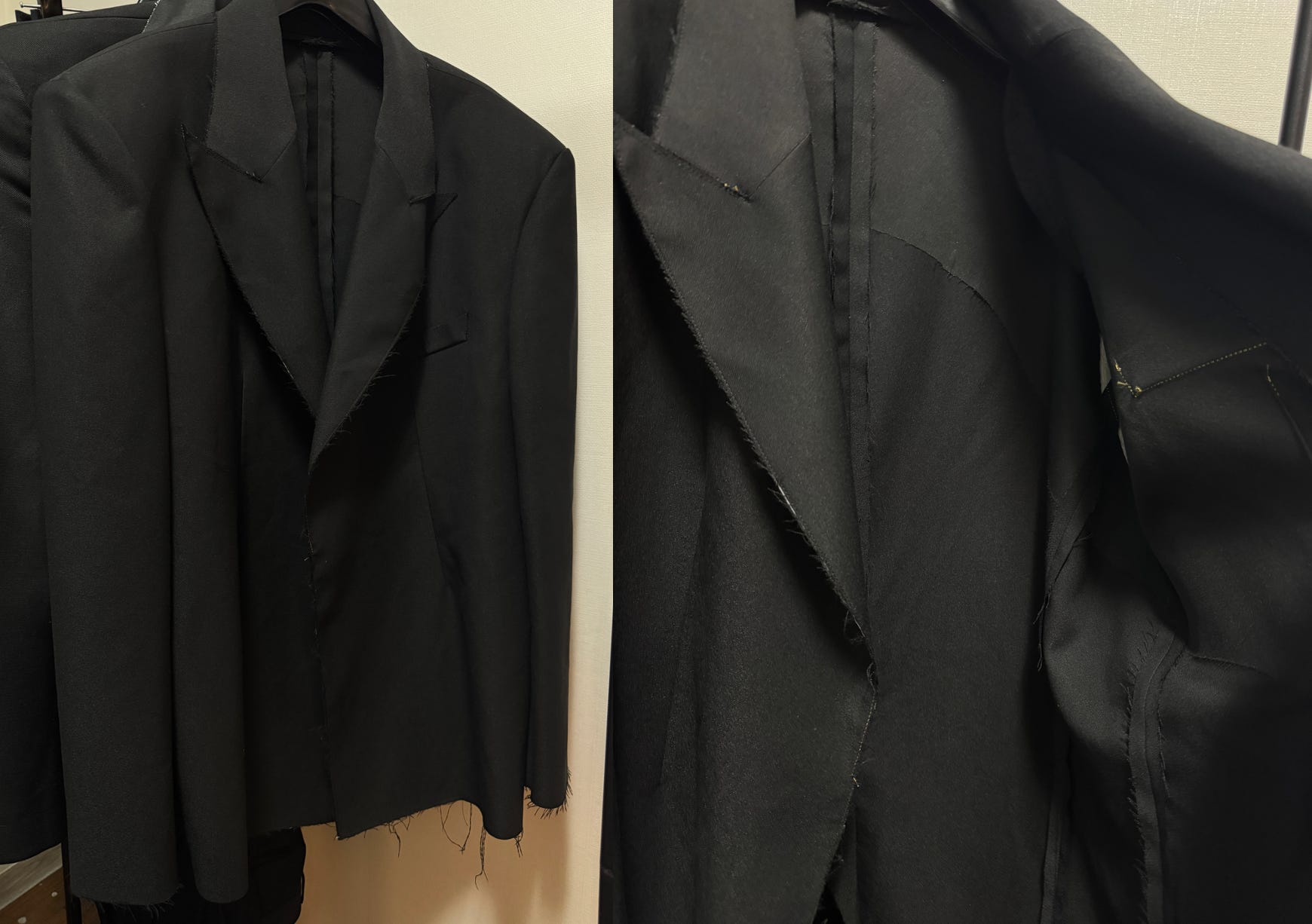
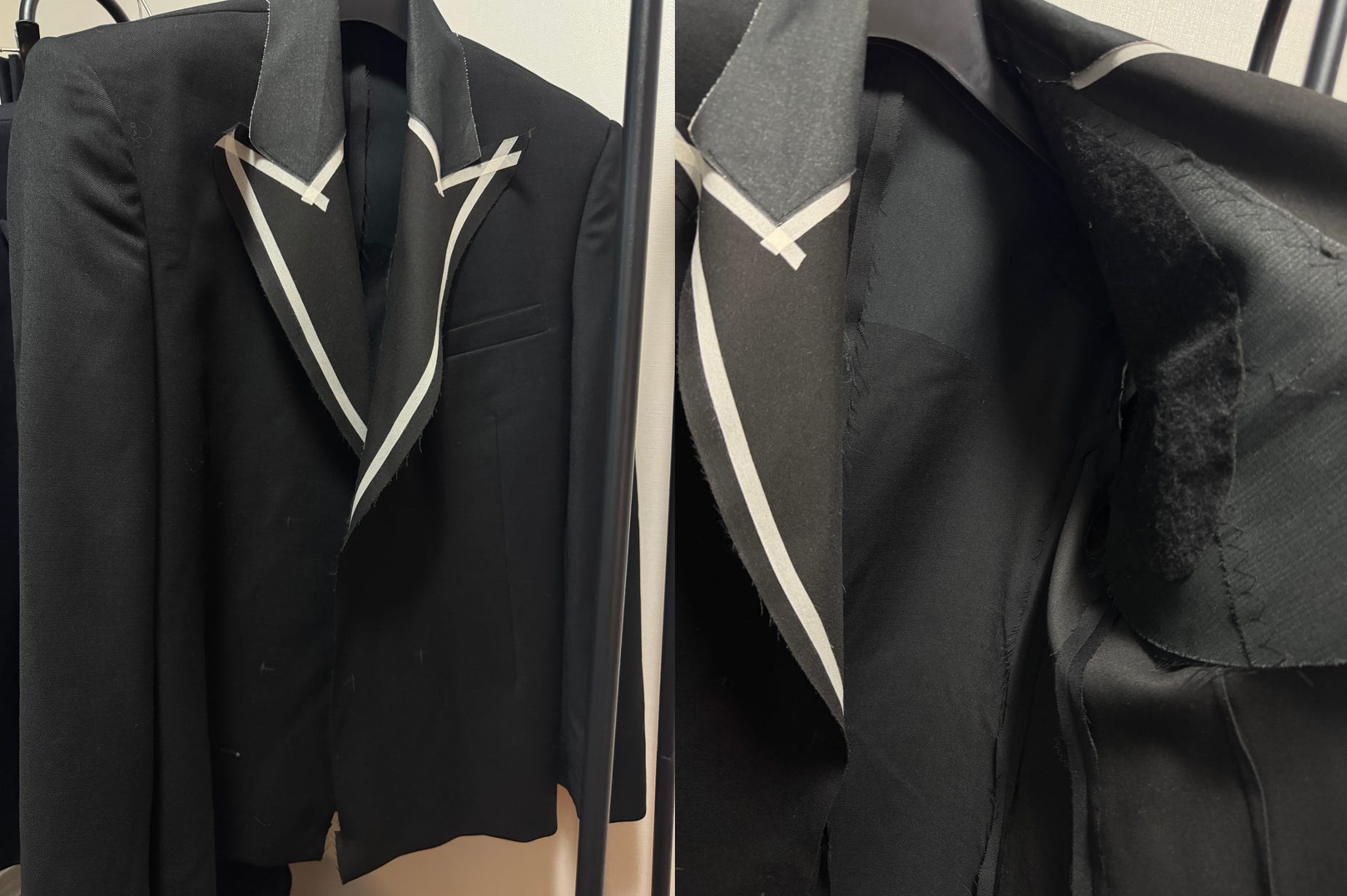
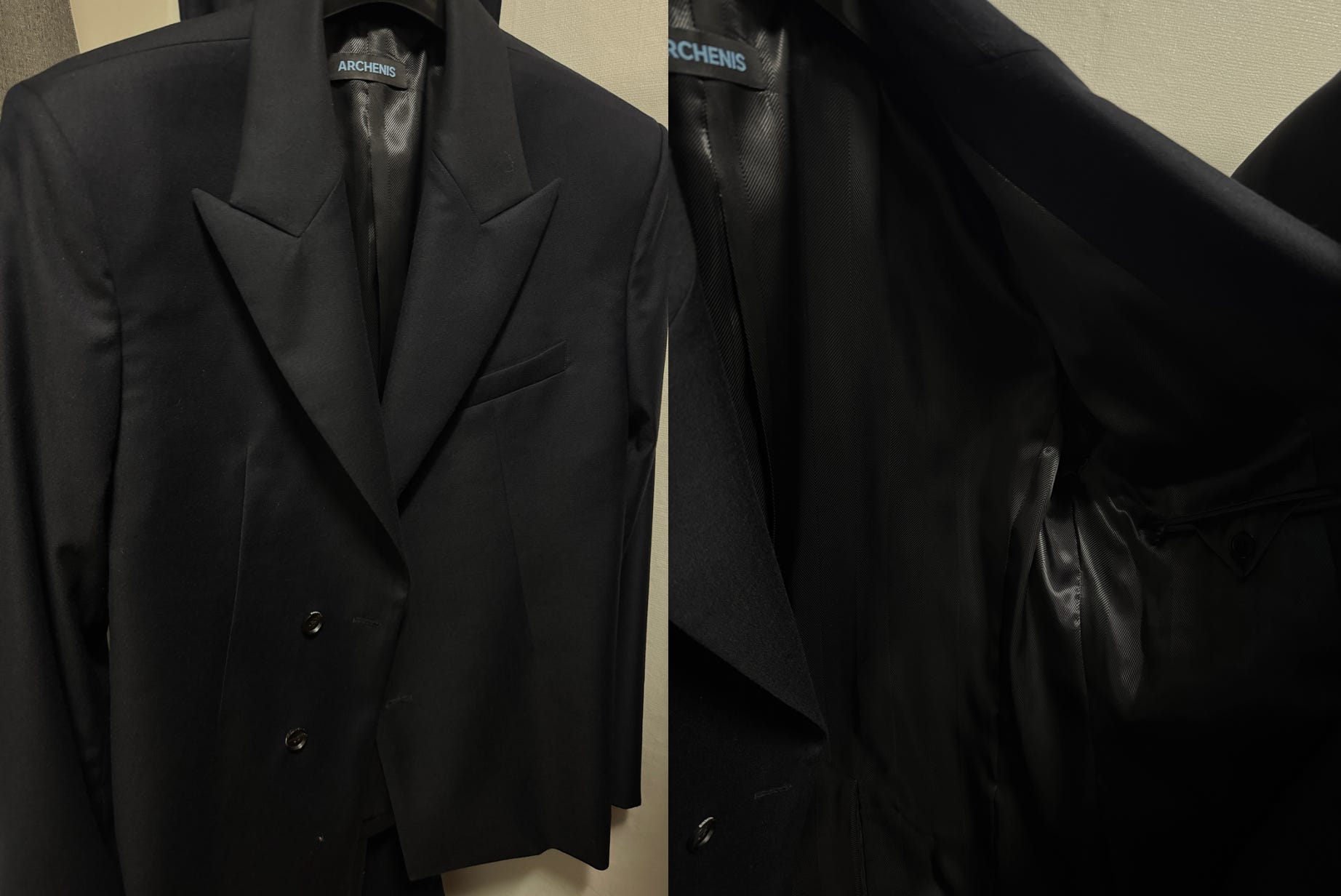
The garment shown above went through two fittings and two samples. In total that meant four rounds before it reached the level we wanted.
This is also why fashion brands are always working one season ahead.
In summer we are already thinking about winter.
In winter we are already preparing for the next spring and summer.
There is something strangely satisfying about having a profession that always asks you to move toward the future.
Main Production : Sewing and factories — why it had to be high-end contemporary
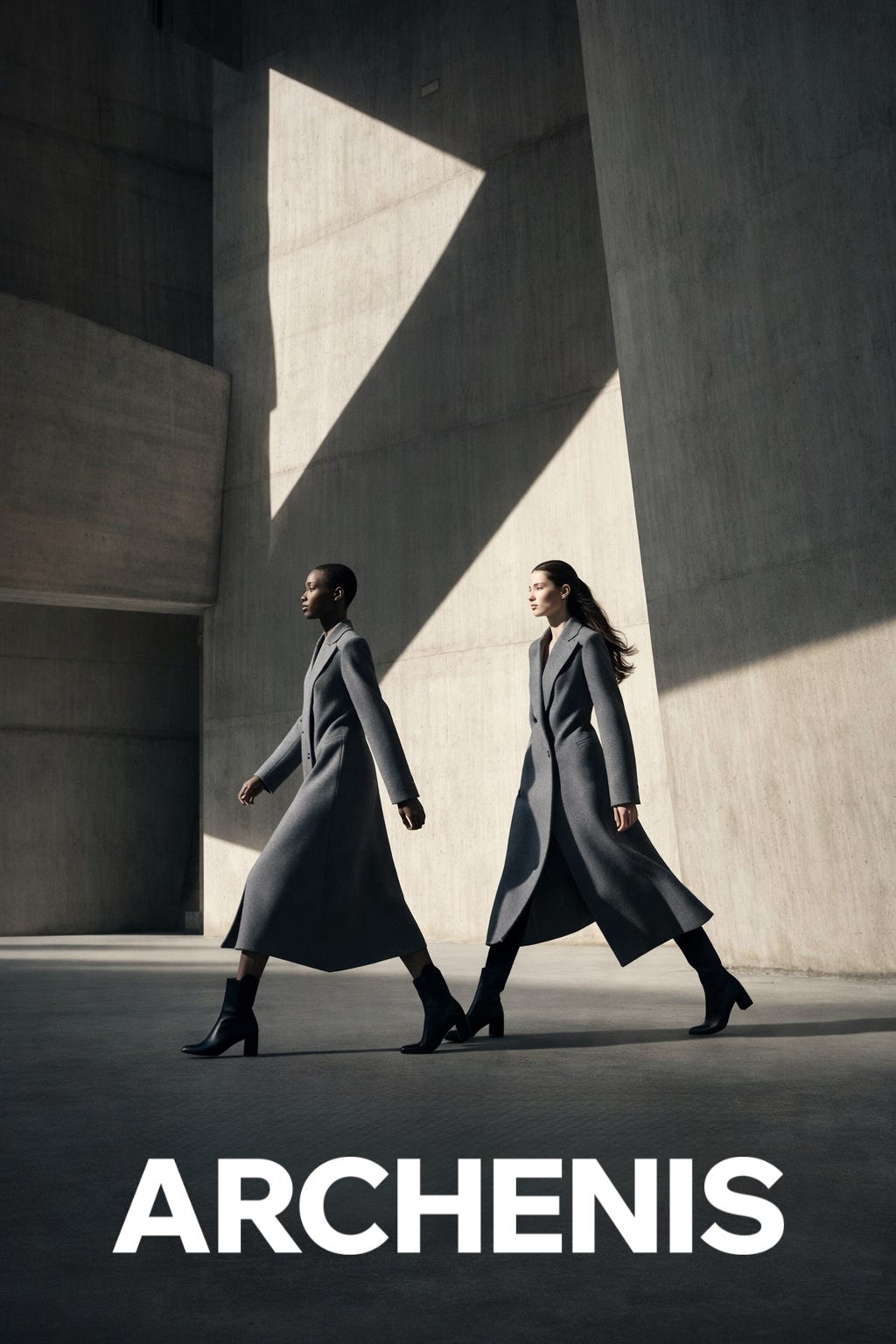
I am not a genius. I did not have connections. I did not start with resources.
If someone like that wants to succeed from the very bottom, there is only one answer: to work brutally hard.
I understood that by the time I was in the second year of high school. Since then, the central rule of my life has been effort.
Every opportunity I was able to take came from the same pattern. Studying while others rested.
Thinking longer when others moved on.
Lowering my head and walking in even when I felt embarrassed, overlooked or treated lightly. S
pending money if I had to in order to learn and create a chance. Walking through uncertainty every day even when the road ahead felt like fire and thorns.
That was the only way.
Finding the right production factory was no different.
At first I had no idea where to begin.
There were many places with low standards but very few partners capable of meeting the level our brand was aiming for.
It took time and a great deal of trial and error.
But eventually we found production partners who could realize the level of quality and sensibility ARCHENIS stands for.
The approach varies depending on the item.
For categories such as denim and leather where the process is complex and the number of variables is high, development and production are carried out with specialized partners in those fields.
What matters is not whether something is made fully in-house or through outside collaboration. What matters is whether the final result can reach the intended level of completion.

As of the time of writing we work with three factories.
It is difficult to share exact brand references, but I can offer only the first letters of some of the labels they handle.
Juxx.x, Solid xxxxx, Recxx, yeaxxxxx, Systxx xxxxx, Kimxxxxx, Sxx, Wooyxxxxx.
After a long process of searching and endurance, we came to work with partners in Korea capable of producing the level of quality seen in domestic high-end contemporary and designer brands.
After production begins

The work does not end when main production starts.
Even after the factory begins production, there is still a long process ahead.
Threads are trimmed.
Marks and stains are removed.
The shape is refined again through pressing.
Trims are checked one last time.
The garment goes through final quality control.
Only then does it move on to packaging.
Fashion can appear elegant from the outside. It can look like an industry full of beautiful things and smiling people.

But the reality is closer to a swan. It looks calm on the surface while beneath the water there is constant movement.
That is how a garment is made.
In truth the time spent actually designing is only a brief part of the work.
Most of the time goes into production, meetings, travel, moving fabric, revising samples again and again and again, allocating trims and fabric where they are needed, packaging, customer service, financial analysis, cost planning, marketing, and raising capital.
Through all of those processes an ARCHENIS garment finally reaches the customer.
What we want people to feel is simple.
That there is care and love in every garment we make and in every trim we choose.
That we do not compromise because I am making something I would wear myself.
And that this is exactly how we choose to present ARCHENIS to you.

→ Next Article