
2-3. CRAFT / Trims
Trims
Once the direction of the fabric, design, and pattern is set, the next step is choosing the trims.
They may look like small details on the surface, but trims have a far greater impact than most people expect. They change the mood of a garment, the way it feels in wear and even how well it lasts over time.
A different button, zipper, interfacing, or snap can leave a garment with a completely different level of finish.
When ARCHENIS selects trims, we look at two things above all.
First, safety and feel in the areas that come into direct contact with the body.
Second, the level of finish that reveals itself over time.

First: materials that are as responsible and sustainable as possible
Whenever possible we choose trims made from more ethical and sustainable materials.
That said we are not interested in greenwashing or in hiding the essence of a product behind the label of “eco-friendly.”
Becoming known for ESG or sustainability is not our main priority, nor is it the central purpose of the brand.
For an early-stage label working in small quantities insisting on sustainable materials and trims is not easy in practical terms.
Costs can range from one and a half times higher to as much as five times higher than standard options. From the standpoint of a founder that is a real burden.
Still my very first job gave me a wide view of how an organization moves and how a single decision can ripple through a company, its people, its partners, and society at large.
As part of a global consumer company I saw what it meant to operate under public attention. That taught me the weight of responsibility from both the inside and the outside.
There was a time when I believed success was entirely the result of my own ability. Looking back, that was arrogance. As I spent more time in the world of work I came to understand that my life as
it exists now has been shaped by the direct and indirect help of countless people.
And when you realize how much of who you are has also been shaped by sheer luck, it leaves very little room for pride.
The more years I spend working, the more clearly I feel it.
No one does this alone.
And if that is true then what we have received has to be given back in some form. As a business, creating positive influence is not just a preference.
It is part of the responsibility.
ARCHENIS may never become a brand that is one hundred percent perfectly sustainable.
I also cannot say yet whether every product we make will one day move entirely in that direction.
We understand the limits of the word “sustainable” itself.
We also understand how easily the idea can become empty branding.
If you take the question to its absolute end, even driving a car becomes hard to justify. Moving one human body that weighs fifty to eighty kilograms by putting a machine that weighs several tons onto the road already contains a contradiction.
Even electric vehicles are not free from pollution. Electricity itself has to be produced somewhere.
Still within the world we live in, what I can do is simple.
I can choose to act on what I believe is right.
That may not be a great innovation. But if it helps even a little — for someone’s health, for society, or for the planet — then that is meaningful enough.
Compared to all that I have received from the world, there is still far more to give back.
Hangtags and paper goods
Even for hangtags and paper packaging such as mailers and boxes, we use products certified by the FSC, the Forest Stewardship Council.
That means the wood-based materials meet standards designed to protect forests and uphold social responsibility through a broad set of environmental and ethical criteria.
라벨
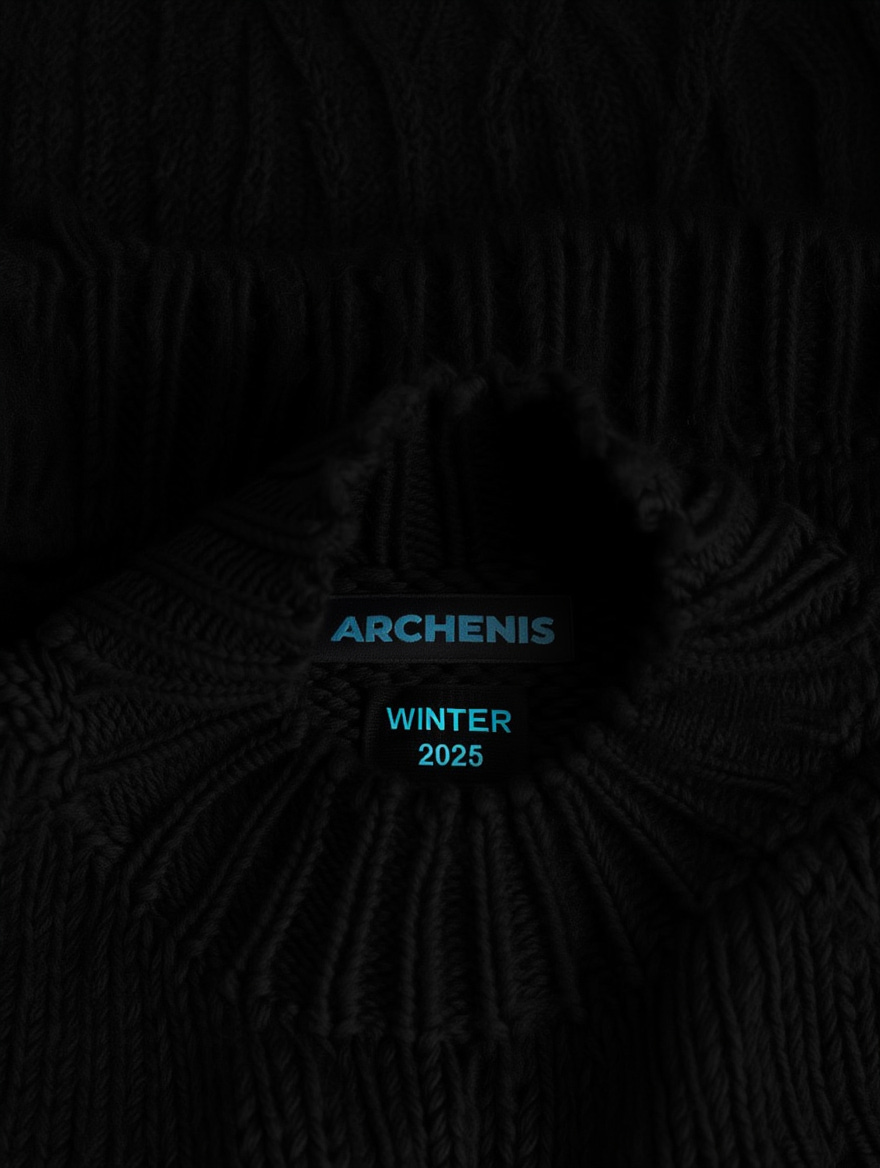
Every garment has a label.
And the label at the back of the neck is one of the areas that sits closest to the body.

For that reason we only use labels that meet the OEKO-TEX Standard 100.
That certification evaluates textile products and all associated materials across every stage of processing to ensure they are free from harmful substances for the human body.
This is another area where we have no intention of compromising, even if the cost is higher.
Second: high-end trims
There are many kinds of trims that go into a garment beyond the fabric itself. Here is a simple introduction to the trims ARCHENIS uses now and plans to use going forward.
Buttons
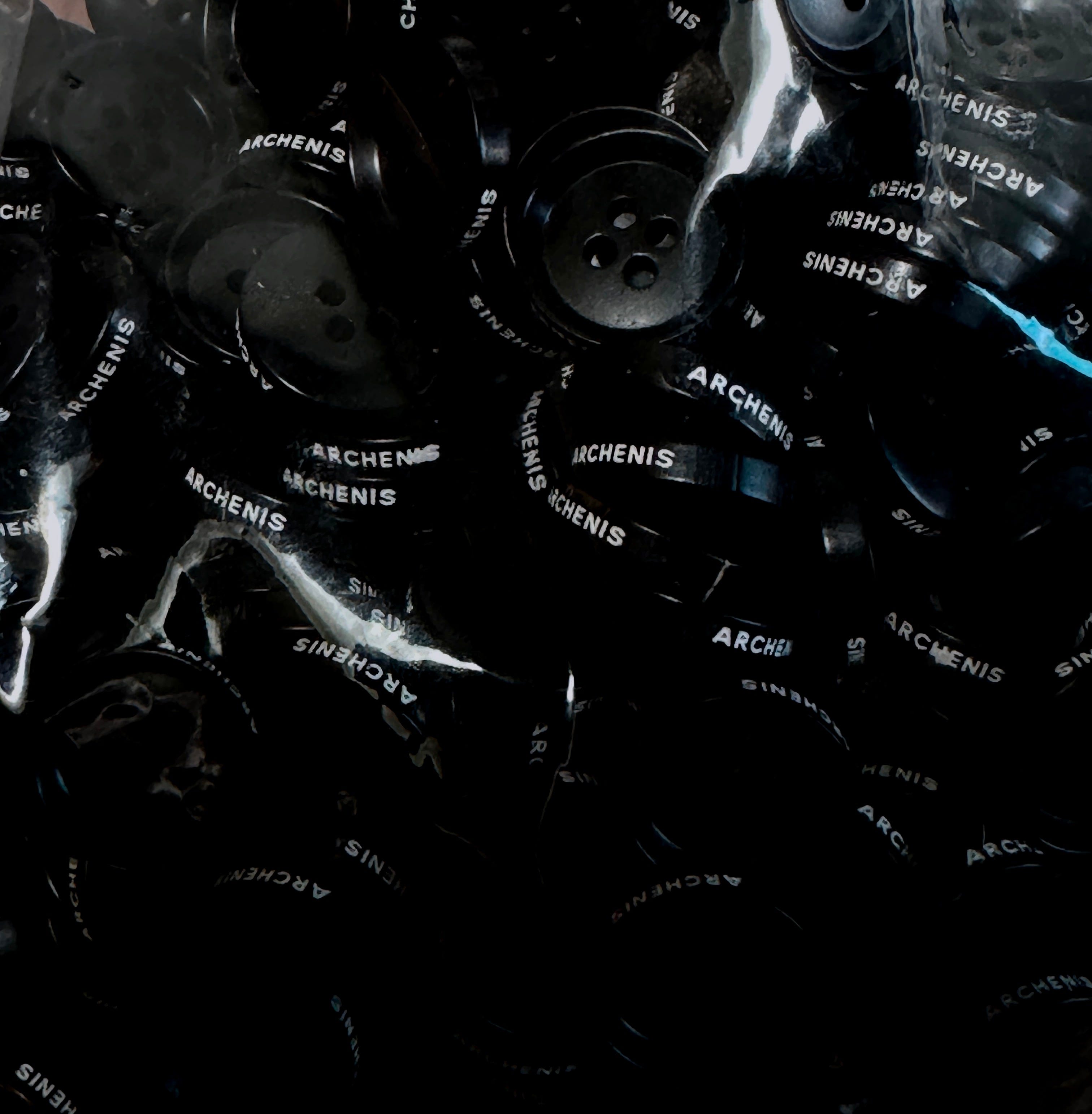
For jackets and coats, we use real horn buttons.
They are expensive. But after wearing everything from low-cost clothing to high-end pieces I have never changed my mind about using natural horn for tailoring.
Horn buttons have a quality that only horn buttons have.
Like fingerprints no two are ever exactly the same.
Each one feels like an independent organic object. Something alive in its own way.
When you hold them or look at them closely it becomes impossible not to feel attached to them.
They make you want to treat the garment with more care.
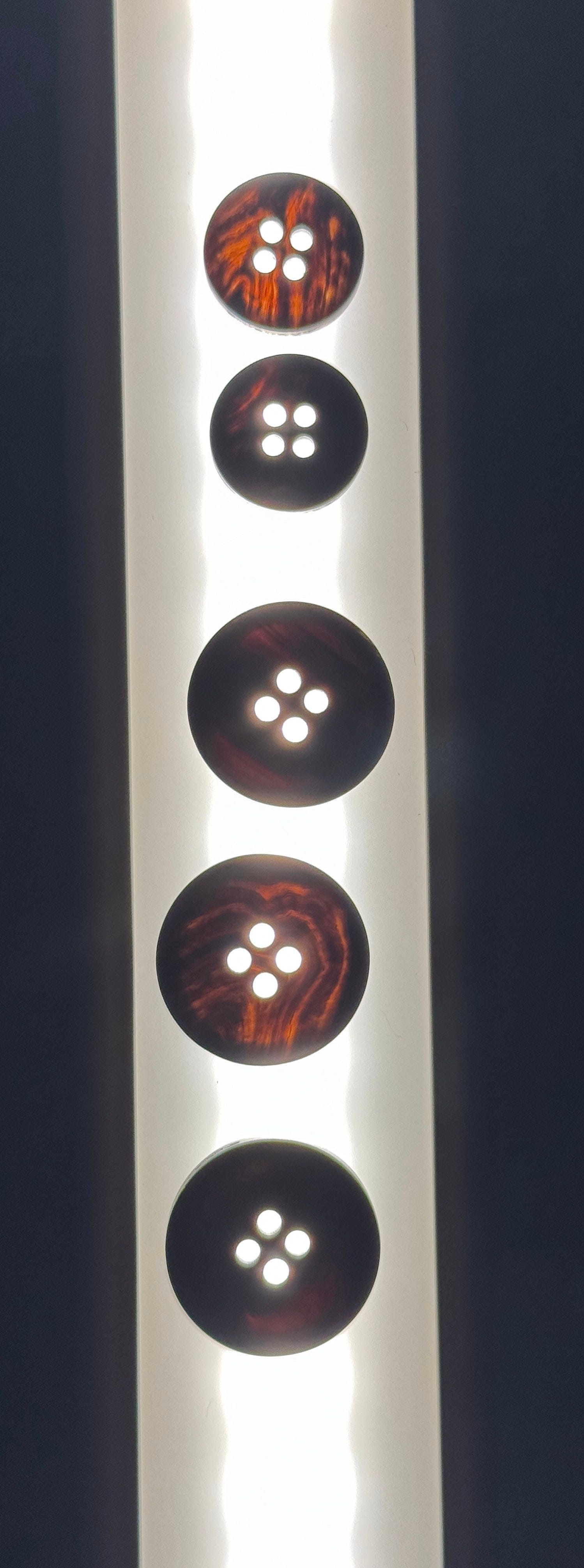
For shirts, we use both natural shell buttons and resin buttons.
We use them side by side depending on the design and the intended function of the garment.
Shell buttons have a unique glow and subtle expression. Resin buttons offer more consistent strength and a cleaner uniform appearance.
When we choose resin it is often because many of our garments sit in a toned-down color.
In those cases resin can temper the shine of shell and add strength at the same time.
All of them are custom-made and marked with our logo.
But we do not rely on resin alone.
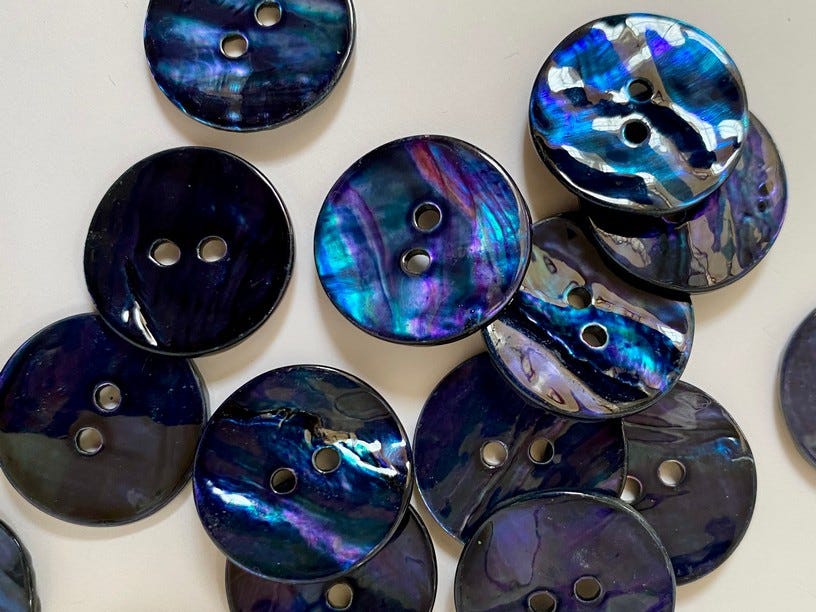
When the design calls for it, we also use natural shell buttons for the depth of their luster and the beauty they bring to the garment. They have an ambiguous glow to them. Something almost jewel-like. They are the quiet detail that lights up a shirt.
Truly good shell buttons carry a kind of refinement that low-cost garments simply do not have.
And like horn, each one has its own pattern. Like a fingerprint, each one is singular.
But every strength comes with a weakness.
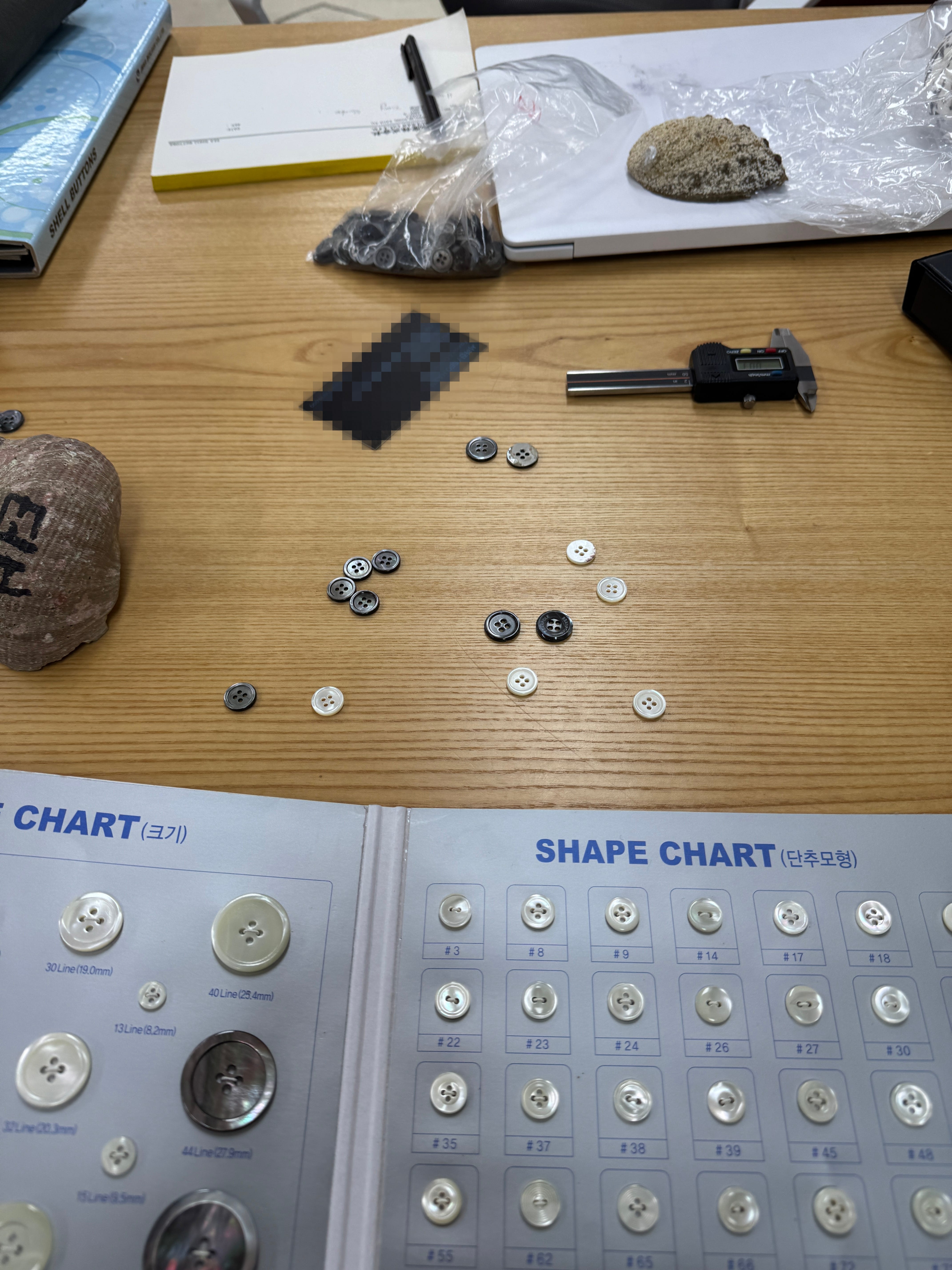
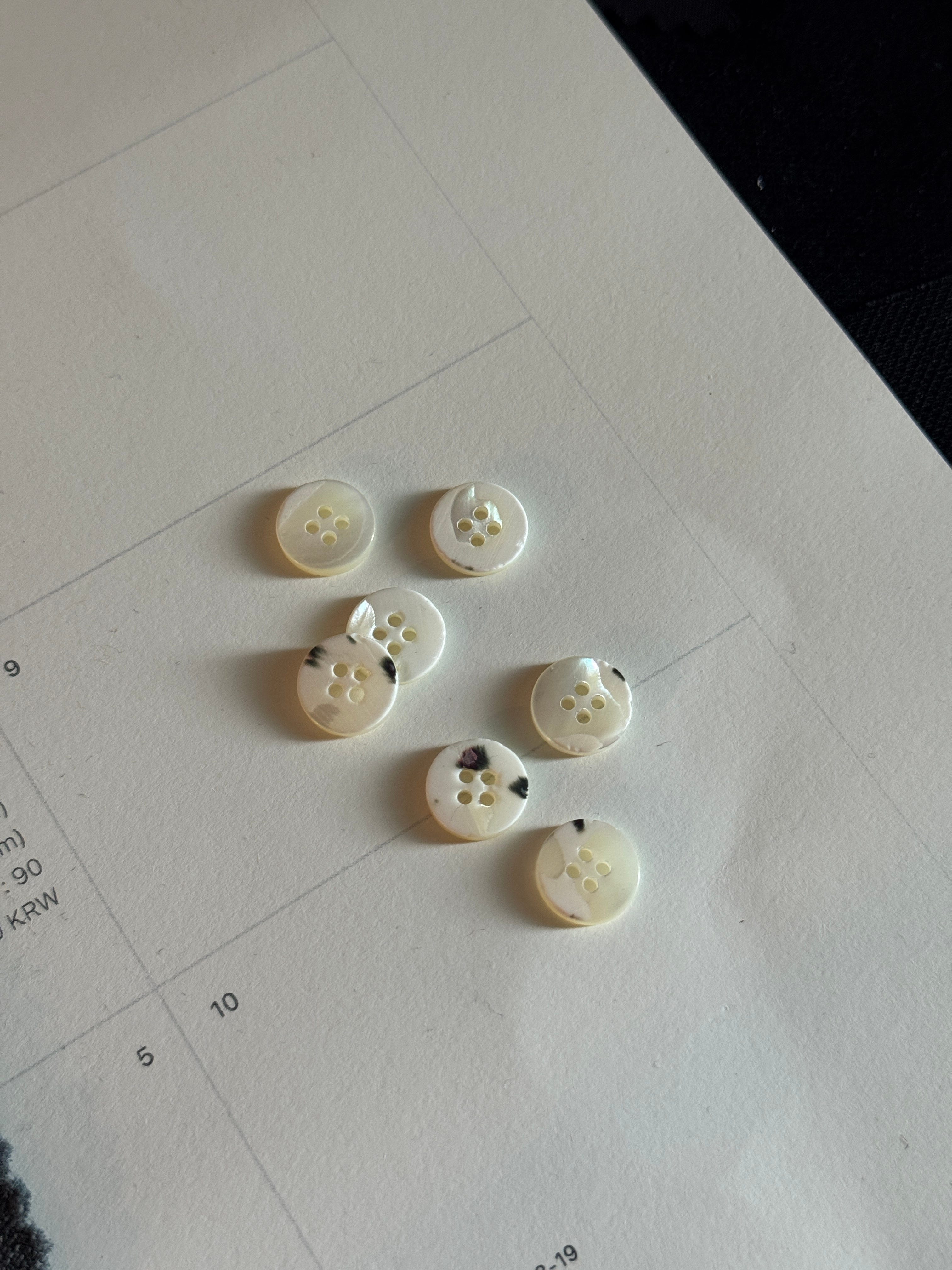
Buttons on shirts and blouses are much smaller than those used on coats or jackets. Many are around 11 mm. At that scale, the smaller they get, the more fragile they become from a structural standpoint.
Natural shell also carries an unavoidable tendency to crack or chip. In that sense, it behaves a little like a tiny piece of porcelain.
They can break during washing, shipping, or even in production. That means we have to order and prepare more spare buttons than expected. Naturally, that raises the cost.
Even so, it remains too compelling a material to give up.
When the glow and visual character of shell are right for the design, we use mother-of-pearl.
For the best possible finish ARCHENIS sources mother-of-pearl buttons from two highly regarded specialists selected under very strict standards.
KOREA — 40 years of expertise
Our Korean manufacturing partner has focused exclusively on natural buttons for over four decades. They supply trims for high-end garments in Korea as well as export production and bring a stable level of quality backed by deep process knowledge.
JAPAN — 100 years of heritage
Our Japanese partner is a fourth-generation natural button maker with a history that stretches back a century. They are chosen by houses such as Hermès and Louis Vuitton as well as some of the world’s most respected shirtmakers. They are widely regarded as one of the highest standards in shell button finishing.
Both partners import premium mother-of-pearl and trochus shells from places such as Indonesia and Australia. Through each company’s own polishing process, they bring out the luminous quality that only natural shell can offer.
Zippers
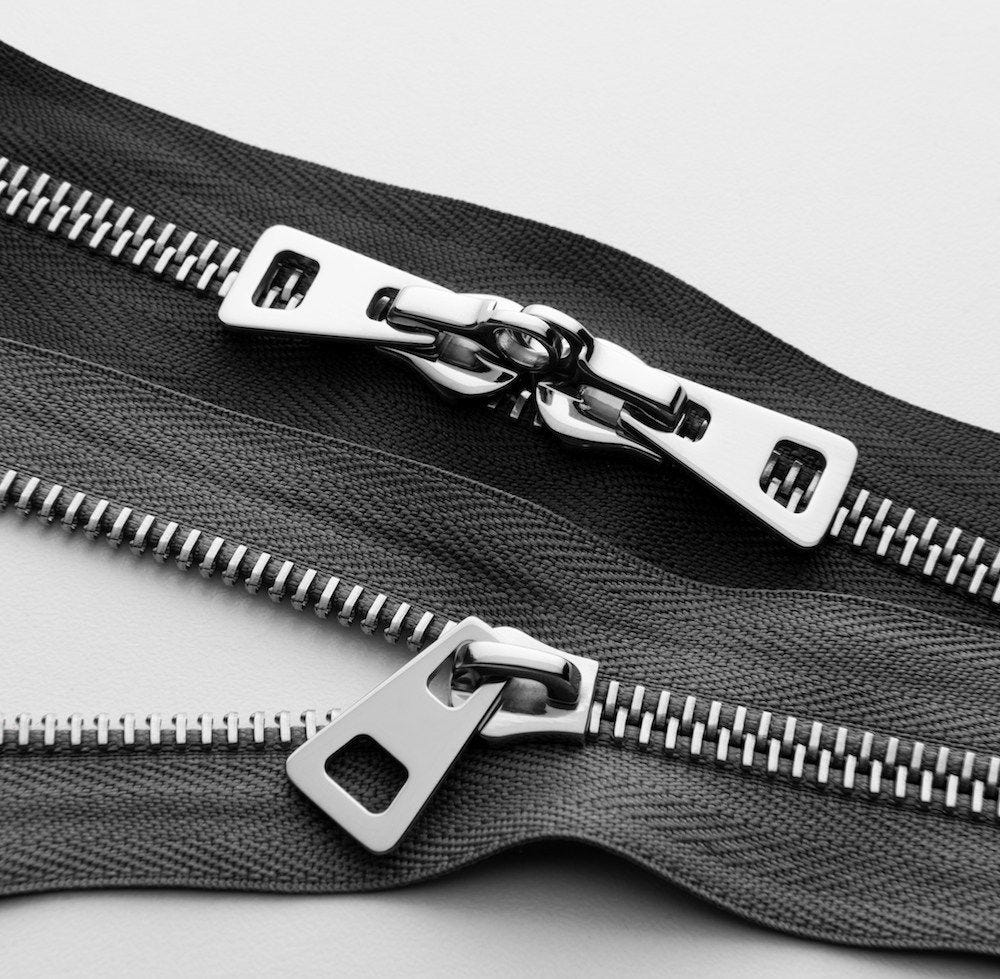
The same is true of zippers.
A good zipper may not stand out immediately, but the difference is unmistakable in use.
When I was younger and only wore inexpensive clothes, I did not understand how important a zipper could be.
The smoothness of the motion, the resistance in the hand, and the durability that remains over time are things only someone who has used them can really understand.
Because both my work and my personal life revolve around fashion, I have spent years around better garments. Over time I began to understand why these details matter, and I promised myself that if I ever built a brand I would take them seriously.
That is why we prefer Japanese YKK over standard low-grade options.
And while YKK is more than enough for many garments, we also work with higher-tier lines such as YKK Excella from Japan, Riri from Switzerland, and Lampo from Italy, depending on the purpose.
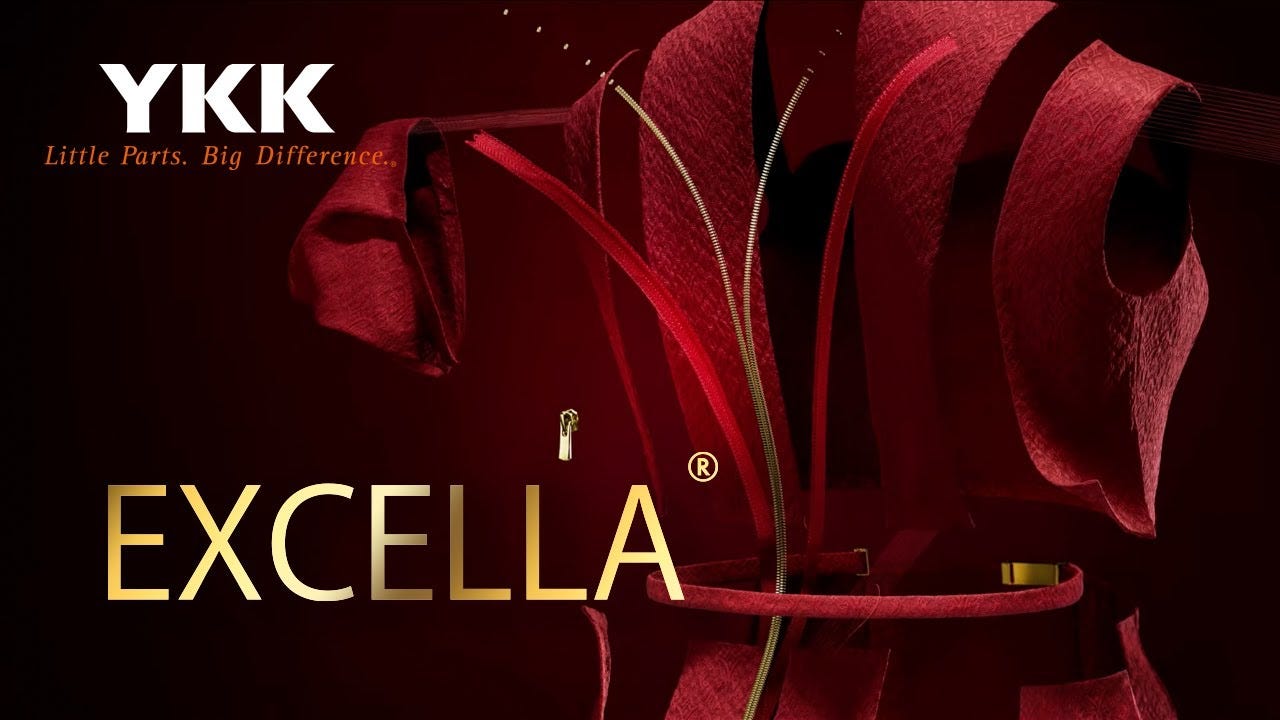
YKK Excella
YKK was founded in Japan in 1934 and is known worldwide for consistent quality. Excella is its premium line.
Each zipper tooth is individually polished to achieve exceptional smoothness and sheen.
It is used by brands such as Louis Vuitton and Lemaire.
What I like about Excella is that it can feel slightly firm at first, but over time it becomes smoother as it wears in. That sense of aging is part of its charm. It feels a little like leather becoming yours.
Lampo
Lampo was founded in Italy in 1887 and carries more than a century of history.
It is known for a slender and elegant silhouette, rich plating quality, and a distinctly Italian sense of finish.
Brands such as Prada, Gucci, Balenciaga, Tom Ford, and Chanel have all used it. Like other luxury zipper makers, their products are often customized with the brand’s own logo rather than the Lampo name itself.
Despite being made of metal, it has a softness and flexibility that almost feels like fabric.
Riri
Riri was founded in Switzerland in 1936.
Its strengths are a satisfyingly solid closure, refined metal craftsmanship, and a slider design that feels distinctive in the hand.
It is used by brands such as Rick Owens, Maison Margiela, Visvim, and Bottega Veneta.
Riri has a very particular pull to it. There is a slight resistance and a sound that feels almost addictive. Even though it is expensive, that is one reason people continue to insist on it.
It has the emotional quality of true high-end hardware. It feels robust. It feels precise. And it feels smooth in a way that is hard to fake.
Each zipper has its own strengths.
ARCHENIS does not choose the most expensive zipper simply for the sake of price. We place YKK where movement matters. We choose Lampo where visual elegance matters. We choose Riri where solidity comes first.
And even that is not a fixed formula. Depending on the season, the design, and the intention of the piece, the choice changes.
These zippers can cost fifteen to eighty times more than ordinary ones depending on length, material, finish, and construction.
Why is there such a difference?
Polishing
Standard zippers are usually finished in bulk. Excella, Riri, and Lampo involve far more refined treatment of each tooth. That is why they do not feel rough under the hand. They feel almost silky.
Plating quality
Ordinary zippers tend to fade or lose finish over time. Premium zippers use processes closer to fine metal finishing and maintain their shine much longer.
Durability
They go through repeated testing and often become even smoother with use. There is a reason people say a garment may wear out, but the zipper remains.
Interfacing
I love jackets. Not only traditional suiting, but jackets used in a more casual contemporary way.
They are difficult to make. They are demanding. They involve a great deal of labor and many different trims.
But perhaps because of that, I feel even more attached to them. A little like assembling a complex model by hand.
When ARCHENIS makes jackets, we use interfacing. More specifically, we use a non-fused half-canvas construction.
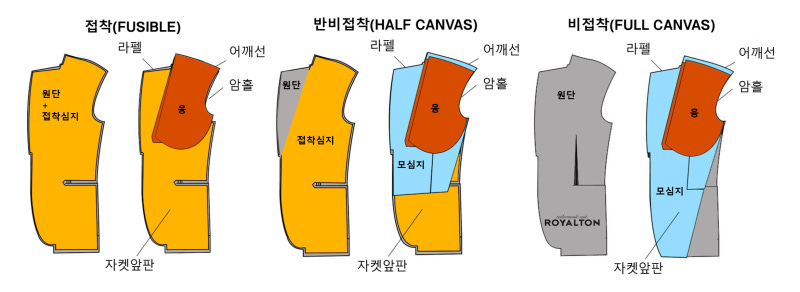
Most jackets and blazers use a fused construction. In simple terms the shell fabric and interfacing are bonded together with adhesive.
That approach lowers cost because it saves time.
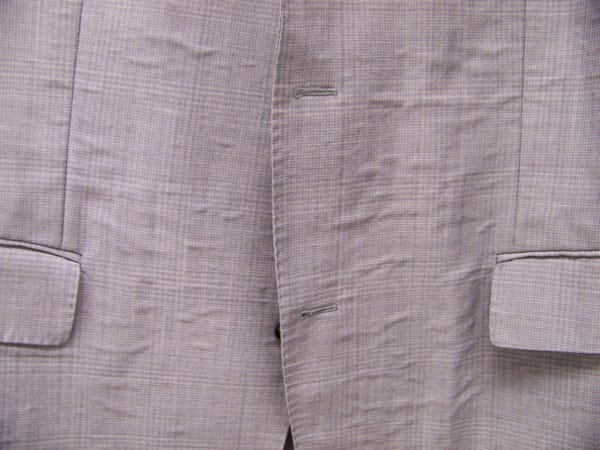
But there is a clear tradeoff.
When fabric is sealed by glue, it loses the ability to breathe. Over time it also becomes vulnerable to bubbling on the surface.
That is one of the clearest limitations of cheaper jackets.
A low-priced blazer made with low-grade fabric low-grade trims and low-grade sewing may feel acceptable at a younger age when almost anything looks good. But as time goes on it can begin to work against the wearer rather than elevate them.
A non-fused construction is different. It helps the jacket keep its shape and makes it more wearable over time.
It gives the garment natural volume, supports the way the fabric falls, improves breathability and preserves the jacket’s inherent structure in a more beautiful way.
At ARCHENIS we specifically use half-canvas.
It is not as extreme as a fully canvassed construction but it gives us a much better balance and shape than fusion.
(A full canvas is often found in expensive bespoke tailoring or in ready-to-wear jackets that begin at very high price points.)
Snaps & Hardware
I do not personally have a skin condition or a metal allergy.
But during sample production, a factory owner once mentioned that some metal buttons can trigger allergic reactions in certain people, even if the chances are low.
That stayed with me.
It made me think that if a garment is something worn closest to the body, then every part that necessarily involves metal should still offer trust and safety wherever possible.
So from the start, ARCHENIS never placed cheap low-grade metal trims in the candidate pool.
Instead, we spent a great deal of time looking for trims that could meet our standards for safety functional finish, and where possible environmental responsibility as well.
Our first principle is simple. Snaps are used in areas opened and closed repeatedly, so the structure has to be stable and the tension and finish must hold over time.
They must withstand repeated use without losing form. They must maintain the same closure feel over time.
To get there, we went through repeated sampling, wear testing, and blind testing before identifying the right snap partners.
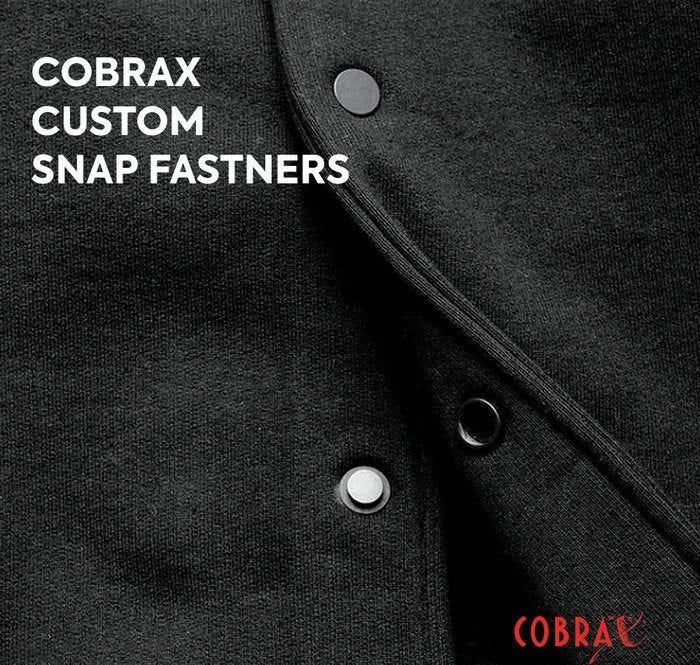
Depending on purpose and design, we use both independently developed Korean snaps and Cobrax snaps from Italy.
1. Independently developed Korean snap — Safety & Sustainability
This snap was developed in Korea and holds both ECOCERT and OEKO-TEX certifications.
That means it goes beyond being harmless to the body. It also addresses environmental impact.
It excludes toxic substances such as nickel, lead, and cadmium, all of which are often found in lower-grade buttons. It also places strict controls on chemical use in the plating process. In that sense, it aligns with a more sustainable way of operating.
2. Italian Cobrax snap — Masterpiece Performance
We also use Cobrax, part of the Riri group in Italy and chosen by global luxury houses such as Louis Vuitton and Balenciaga.
The reason we insist on Cobrax despite the cost is its internal structure.
Its patented synthetic nylon ring blocks corrosion and reduces the noise created by metal rubbing against metal. Even after thousands of uses, it maintains the same smooth tension.
It also holds certifications such as OEKO-TEX, GRS for recycled content, and RJC, which relates to responsible sourcing and environmental standards.
What impressed me most was the way that patented structure resists rust and noise while keeping the feel remarkably consistent over time.
In truth, maintaining those certifications requires manufacturers to undergo expensive audits on a regular basis and keep production lines under strict control. That is one reason the unit cost becomes high.
But this is exactly the kind of difference that becomes visible not after the first use, but years later.
Of course, ARCHENIS does not use Cobrax on every single product.
I do not believe filling every item with the most expensive possible trim is always the right strategy.
What matters is not display. What matters is choosing the best option for the structure and purpose of each garment.
Still there is a clear line we do not cross.
We do not drop to lower-grade trims simply to reduce cost.
Small differences may not be obvious at first glance.
But over time they change the wearing experience, the level of trust, and the impression a garment leaves behind.
ARCHENIS wants to make clothes that are not worn for a season and forgotten, but pieces that stay in the wardrobe and become more convincing with time.
That is why we do not compromise easily, even on details this small.
→ Next Article